Lunch DIScussions: The Jura Novit Curia Principle in International Commercial Arbitration

Newsletter 6/2025 - Past Events

Contact
11 December 2025, online

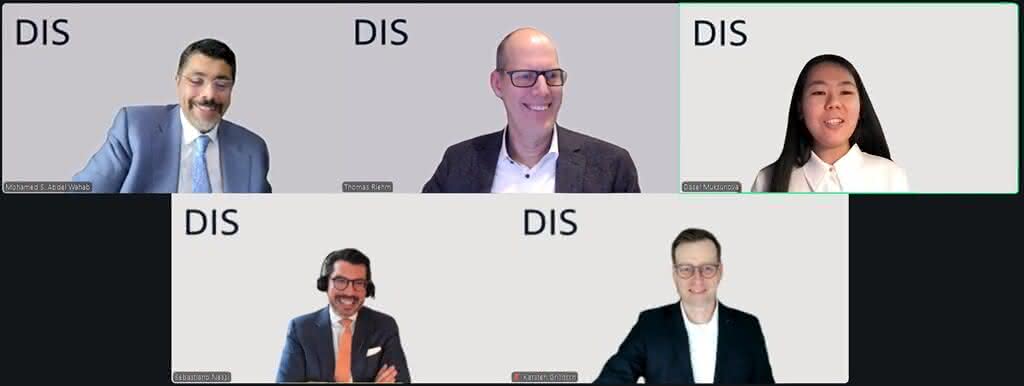
At our Lunch DIScussions on 11 December 2025, the panel by Mohamed Abdel Wahab (Zulficar & Partners), Dasel Muksunova (Mueller Wagner Advocates), Sebastiano Nessi (Curtis, Mallet-Prevost, Colt & Mosle) and moderator Thomas Riehm (University of Passau) unpacked how far jura novit curia reaches in modern international arbitration – and where its limits lie.

What we agreed on:

  • Jura novit curia is neither absolute nor uniform. While deeply rooted in traditions of Roman law, its application varies significantly across jurisdictions and arbitral cultures.
  • Arbitral tribunals may, in principle, rely on legal authorities not expressly invoked by the parties – but this power is closely constrained by party autonomy, equal treatment, the adversarial principle, and the right to be heard.
  • Whether a tribunal is merely permitted or sometimes even obliged to conduct its own legal analysis depends on context, including the sophistication and representation of the parties as well as the legal background of the arbitrators chosen by the parties.
  • Transparency is key: if a tribunal relies on new legal grounds or sources, the parties must be informed and given a meaningful opportunity to comment (right to be heard).
  • Tribunals walk a fine line when identifying unpleaded legal bases or remedies: applying the law to established facts is one thing; prompting parties to expand their factual case is another.
  • Procedural missteps in this area can have serious consequences, potentially exposing arbitrators to challenges for lack of impartiality, awards to set-aside proceedings and denial of enforceability under Article V of the New York Convention.

Bottom line:
Jura novit curia remains a powerful but delicate tool in arbitration. Used carefully, it enhances legal correctness; used incautiously, it risks due process and enforceability.

Karsten Grillitsch
 

Important notice: Outdated web browser INTERNET EXPLORER

The DIS website is not fully compatible with the outdated web browser INTERNET EXPLORER, for which security updates are no longer being provided. Some important functions of the website are not available (e.g. cost calculator, member access) or availability is limited (e.g. event area) with INTERNET EXPLORER.
For full use of the DIS website, please switch to an up to date web browser such as Chrome, Edge, Firefox or Safari.