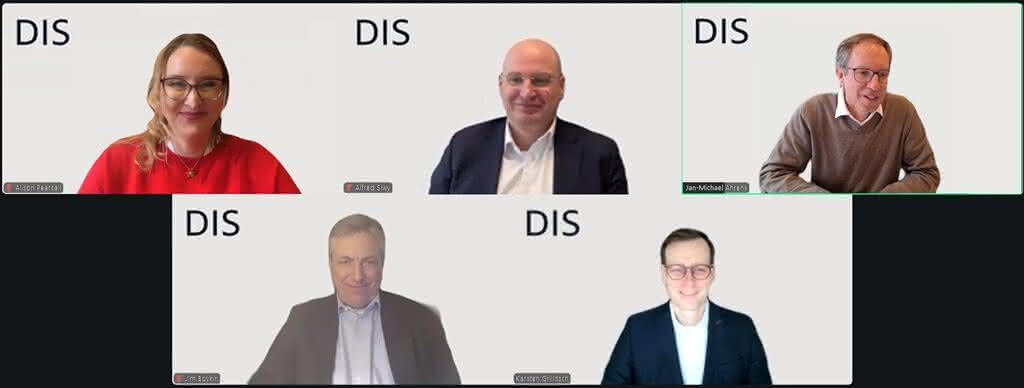
The Lunch DIScussions session on 8 January 2026 focused on the problems of document production in international arbitration and the tools available to keep them in check.
Reflecting on the views and recommendations recently put forward by the ASA User Council in Taming the Beast – A Whitepaper on Document Production, the debate between Alison Pearsall (Atos), James Boykin (Hughes Hubbard Reed), and Alfred Siwy (Zeiler) was moderated by Jan-Michael Ahrens (Siemens).
Against the backdrop of persistent, if not growing, frustrations with document production voiced by corporate and other users of international arbitration, the panellists focused not on just doing away with document production, but rather on how best to rein it in and limit it to what is genuinely necessary to resolve disputes.
The panel discussed various means to keep document production under control. One practical recommendation was to shape document production early, for example by limiting or excluding it in the arbitration agreement, restricting requests to clearly identified and material documents, capping the number of requests, and providing for cost consequences to discourage fishing expeditions. Once proceedings are underway, arbitral tribunals should engage in active case management, possibly addressing document production at the first procedural conference, requiring requests to be tightly linked to pleaded facts, imposing numerical limits, and integrating requests directly into written submissions rather than running a separate production phase. More broadly, the panel advocated proportionate, purpose-driven procedures, supported where appropriate by technology and institutional rules, including for expedited proceedings, so that document production serves the resolution of the dispute rather than becoming a cost- and delay-driving exercise in its own right.
It is hoped that arbitration stakeholders, from parties themselves to arbitrators, counsel, and institutions, will take heed of this initiative and debate, and that efforts supporting the efficiency of arbitration will focus on document production in particular. Arbitration cannot afford ever more expansive and wasteful practices like those seen in this field, and practical recommendations are on the table for all participants.
Karsten Grillitsch