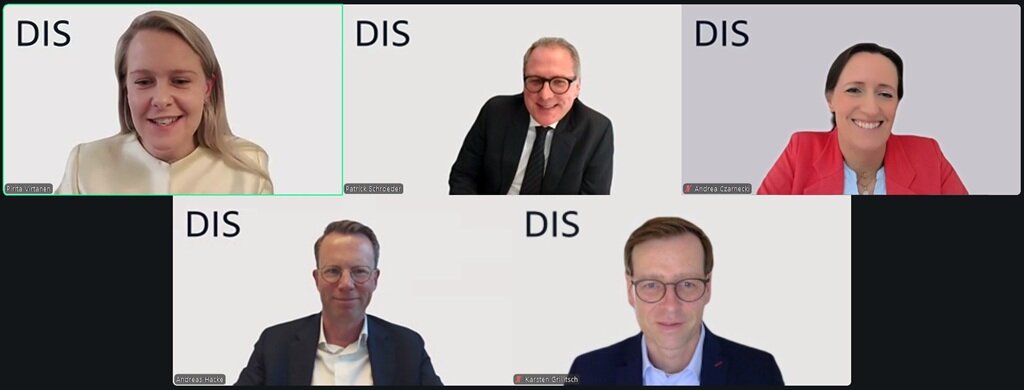
What makes a good mediation advocate? This was the central question of the latest Lunch DIScussions session, “Mediation Perspectives – Part One: Mediation Advocacy – Representing Clients Effectively” on 12 June 2026.
A key takeaway from the discussion was that clients generally are not seeking to win legal arguments, but are looking for ways to solve business problems. In complex disputes, mediation should therefore always be considered a strategic tool, whether to achieve an amicable resolution or to prepare the ground for subsequent adjudicative proceedings.
The panel emphasised that effective counsel goes beyond legal analysis. Counsel seeks to understand the client's underlying interests, identify barriers to resolution and guide the client towards the most effective dispute resolution mechanism rather than defaulting to litigation or arbitration simply because a clause points in that direction. Close cooperation between clients and external counsel is essential to developing a coherent strategy and identifying practical, business-oriented solutions.
Mediation offers a particularly suitable forum for this approach. It is interest-based, flexible, and often more time- and cost-efficient than traditional proceedings. However, mediation advocacy requires a distinct skill set. Counsel must act not only as advocates but also as coaches, helping clients navigate the process while maintaining constant awareness of their procedural and commercial objectives.
Among the most important skills identified by the panel were the ability to listen carefully, to pick up subtle cues from all participants, to resist the urge to react immediately and to continuously assess how developments in the mediation affect the client's interests.
Many thanks to Pirita Virtanen (privatemediator.fi), Andrea Czarnecki (Continental), Andreas Hacke (Zwanzig Hacke Meilke & Partner) and Patrick Schroeder (Freshfields) for sharing their insights and experiences. The discussion made clear that mediation advocacy is both a challenge and one of the most rewarding aspects of dispute resolution practice.
The Mediation Perspectives series will continue in October with “Part Two – Why Should I? The Corporate Perspective on Mediation” and in December with “Part Three – The Mediator’s Toolbox: Styles, Strategies and Approaches”.
Karsten Grillitsch