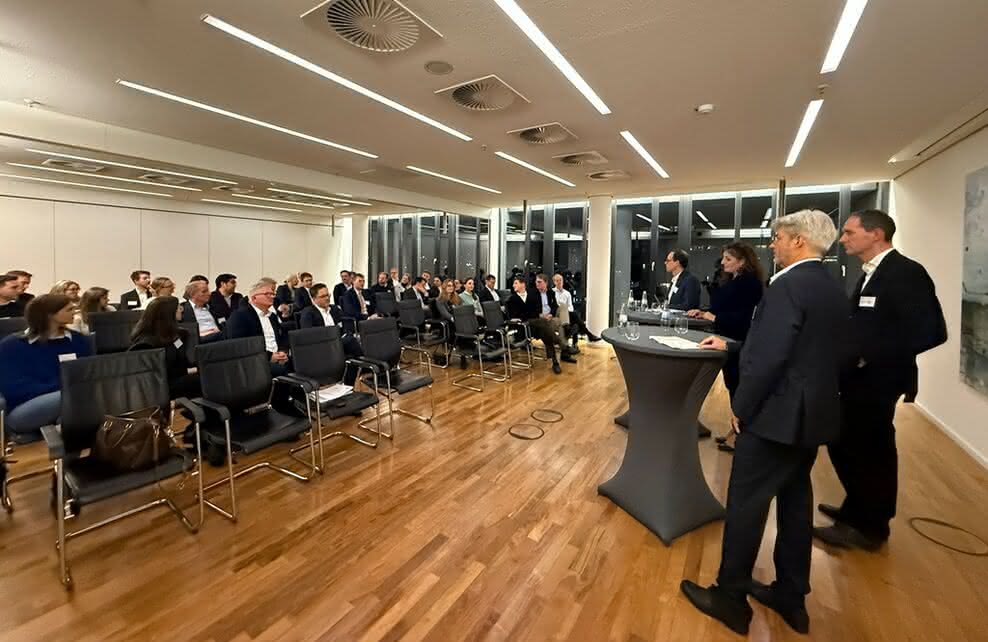
Attendees of the DIS Rhine/Ruhr Regional Group’s winter event on “Enforcement of Arbitral Awards: Hot Topics on a Cold Winter Day,” hosted by CMS, warmed themselves up with a multidisciplinary look at how courts, practitioners, and academics navigate the evolving landscape of arbitral enforcement.
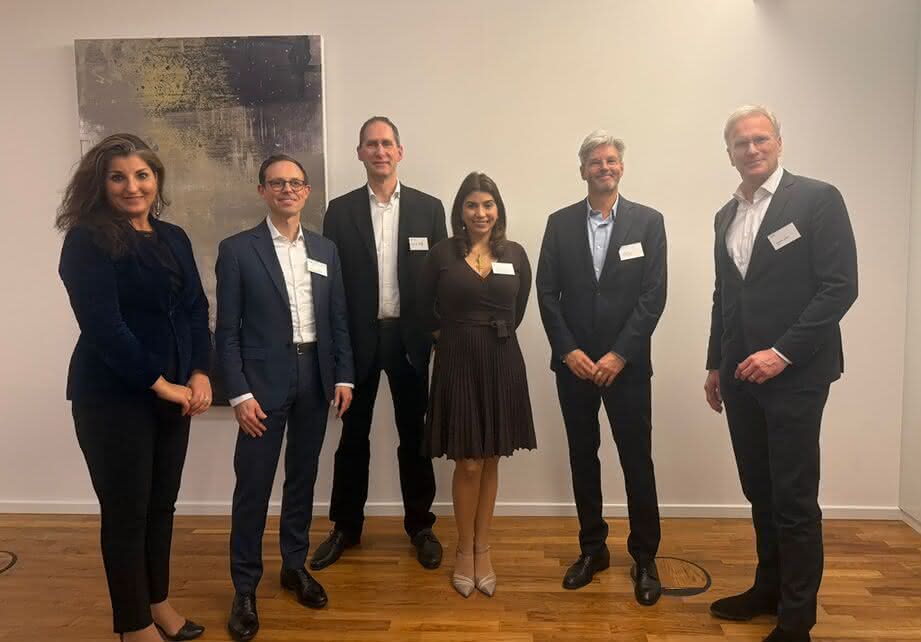
Niuscha Bassiri (ArbBoutique), Frank Czaja (Higher Regional Court of Cologne), Reinmar Wolff (University of Marburg), and moderator Markus Altenkirch (Baker McKenzie), formed the panel on 1 December 2025 in Cologne. Their dialogue bridged doctrinal insights with practical experience, shedding light on both persistent challenges and emerging trends.
A central theme of the discussion was the multi-faceted role of German state courts within the arbitration framework. Courts are not only gatekeepers for the constitution of arbitral tribunals but also play a decisive part in setting-aside and enforcement proceedings. The panelists pointed to section 1062(5) of the German Code of Civil Procedure (ZPO), which channels arbitration cases to specialized Higher Regional Courts (OLG). This concentration of jurisdiction was credited with enhancing expertise and consistency, though it remains politically sensitive in some federal states. Despite the significant attention arbitration receives among specialists, its footprint within the court system remains limited: approximately 25-40 new arbitration-related cases are brought each year before the relevant Cologne senate. Of these, roughly half concern enforceability applications, and only 8-10 awards annually progress to actual enforcement – illustrating that while such cases are few, they are high-stakes and complex.
The substance of these disputes is equally diverse. Beyond traditional commercial arbitration, tribunals within associations and professional bodies – especially in the sports sector – occupy a considerable share. These forums raise intricate legal questions about their qualification as “arbitral tribunals” in the strict legal sense and whether their procedures meet due process expectations. Data presented also revealed sharp variations in dispute values: domestic arbitrations typically involve around EUR 40,000, whereas DIS cases often range between EUR 1 million (2023) and 2.5 million (2024). When it comes to foreign or international awards, enforcement requests tend to face more refusal grounds, often due to complex corporate structures, representation issues, or conflicts of laws.
Turning to doctrine and judicial practice, the panel examined how state courts apply the annulment and refusal grounds under section 1059 of the ZPO and Article V of the New York Convention. Though parties frequently invoke the full spectrum of possible objections, only a few grounds prove decisive in practice, particularly those concerning the validity of the arbitration agreement and the tribunal’s jurisdiction. Alleged breaches of the right to be heard are common yet rarely successful. Courts require not only proof of an omission but also a plausible explanation of how it might have changed the outcome. Challenges concerning procedural conduct or evidence-taking succeed only in exceptional circumstances.
One of the most dynamic discussions concerned the intersection of arbitration and international sanctions. With reference to current measures relating to Russia and Syria, the panelists reviewed cases in which award debtors argued that compliance could breach sanctions or foreign-trade obligations. The debate focused on whether such concerns should be evaluated at the recognition stage (Vollstreckungsklausel) or deferred to enforcement proceedings (Zwangsvollstreckung). Suggested solutions included issuing conditioned declarations of enforceability or shifting sanctions-related scrutiny to the enforcement clause itself, aligning with the German Foreign Trade and Payments Act (AWG) to minimize compliance risks.
Efficiency and due process formed another key thread. Practitioners described the growing use of procedural tools such as page and topic limits, strict scheduling, structured document production, and detailed hearing timetables to increase efficiency. Yet, the panel emphasized that procedural acceleration must always respect the parties’ right to be heard. Clear consent, transparent procedural frameworks, and mechanisms to prevent surprises were identified as essential safeguards; the speakers even acknowledged a “natural lower limit” beyond which acceleration undermines fairness.
Interestingly, the conference also explored the emerging trend of settlements within enforcement proceedings. Courts increasingly structure these processes to facilitate amicable resolutions after partial procedural steps, allowing parties to withdraw applications and formally record matters as resolved. This pragmatic practice reduces uncertainty, costs, and judicial workload while providing faster closure for the parties involved.
In conclusion, the speakers offered practice-oriented recommendations. Arbitration clauses, they advised, should include built-in mechanisms to cure potential procedural defects and prescribe clear – but flexible – page and time limits. Cross-border disputes require early evaluation of sanctions risks and secure payment arrangements, possibly through escrow or tailored conditions in enforcement orders. Efficient procedural planning, such as early hearing calendars, structured witness lists, and front-loaded submissions, helps uphold due process and minimise surprises. Finally, applications for declarations of enforceability should be precisely reasoned, citing the correct forum and statutory basis, while parties should remain open to settlement even in enforcement stages, as negotiated solutions often deliver both cost-efficiency and legal certainty.
The conference demonstrated that the enforcement of arbitral awards in Germany continues to evolve dynamically, shaped by practical experience, regulatory developments, and the eternal search for balance between efficiency, fairness, and legal coherence.
Elizabeth Hincapié Hincapié