The Berlin explanatory memorandum to the draft bill on the modernisation of arbitration law references Swiss and Austrian law in relation to the introduction of a restitution claim (Section 1059a ZPO-E).
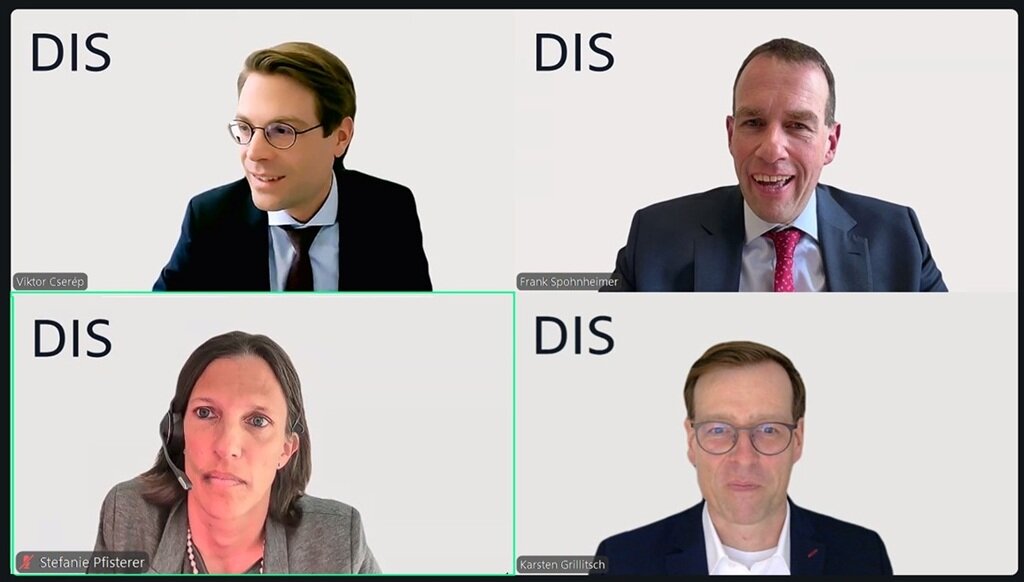
To help provide clarity, three experts - Stefanie Pfisterer (Homburger), Viktor Cserép (Schoenherr) and PD Frank Spohnheimer (FernUniversität in Hagen/University of Osnabrück) - examined the topic from different perspectives at the DIS Lunch DIScussions on 9 April 2026.
It quickly became apparent that the assertion of grounds for restitution in Switzerland and Austria differs in key respects. In Switzerland, for example, there are comparatively broad possibilities – referred to there as grounds for revision – to challenge an arbitral award even after the expiry of the time limit for setting aside the award. This applies not only to evidence discovered retrospectively, but even to facts that only came to light later. In terms of procedural law, the Federal Supreme Court decides on the appeal and, if it is upheld, entrusts the arbitral tribunal with assessing the implications for the arbitral award.
Against the backdrop of the forthcoming legislative process in Germany, an intense discussion ensued as to what grounds should justify a breach of res judicata and where the boundaries should be drawn. Equally contentious was the question of whether state courts or arbitral tribunals should decide on such a remedy and whether, in cases involving alleged criminal offences, a criminal conviction should be required as a condition of admissibility.
The panel, however, agreed that such a remedy should only be admissible under strict conditions and must be designed with great care so as not to jeopardise the finality of arbitral awards, which is central to a functioning arbitration system.
Karsten Grillitsch